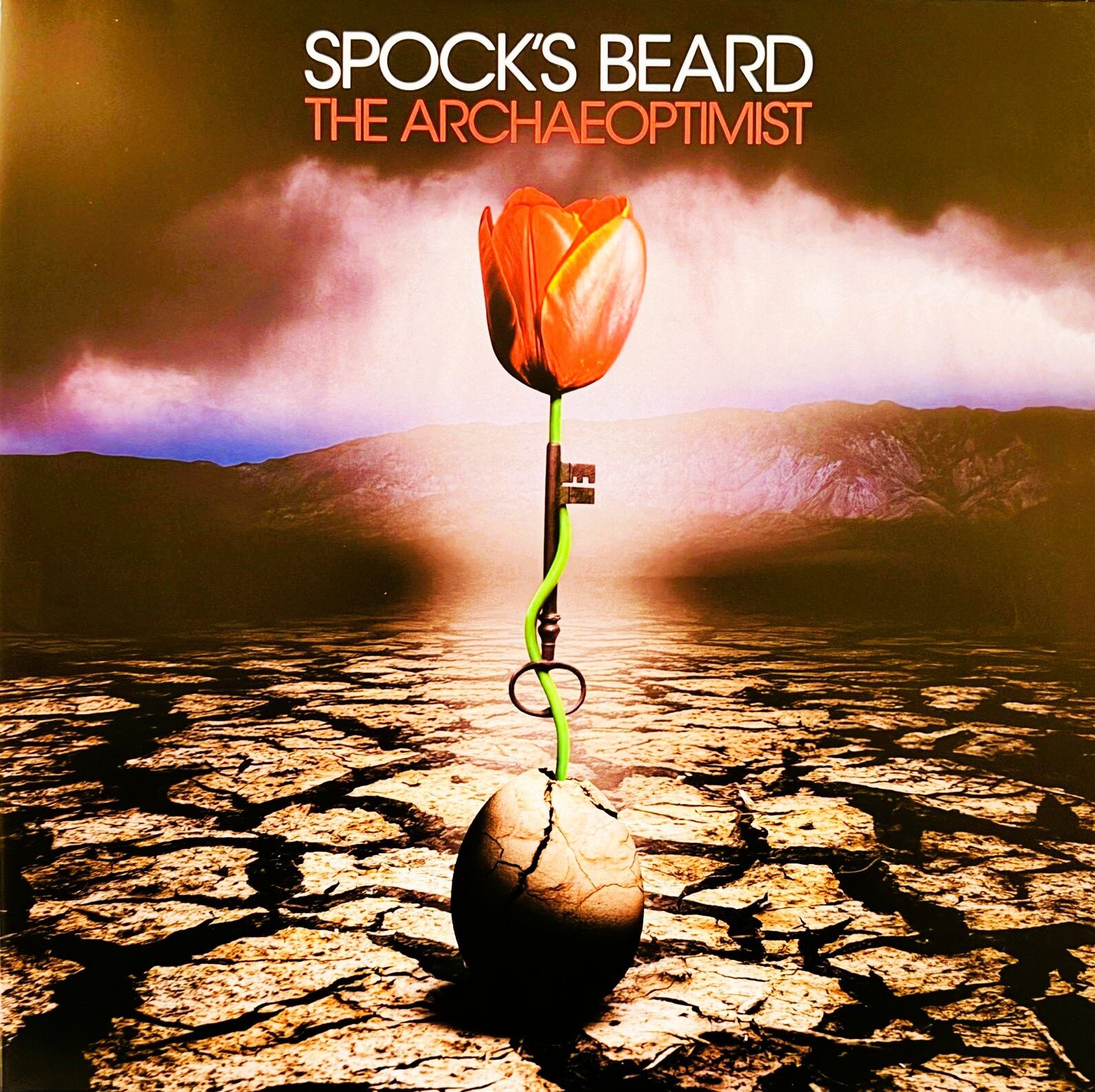
The Archaeoptimist by Spock's Beard, 2025 album.
Spock's Beard is an American band formed in Los Angeles in 1992 by brothers Neal Morse (lead vocals, keyboards, primary composer) and Alan Morse (guitar), a duo joined by Nick D'Virgilio (drums, vocals) and Dave Meros (bass, vocals). Shortly after their debut album, Ryo Okumoto (keyboards) was added.
The band's name originated as a reference to the original Star Trek episode "Mirror, Mirror," set in the parallel universe, in which Spock, played by Leonard Nimoy, has a beard.
Their debut album, The Light (1995), was an independent release that garnered considerable interest and led to a record deal with InsideOut.
The band has gone through several phases over its thirty-year career.
The Neal Morse era.
Spock's Beard released several albums in the late 1990s, including Beware of Darkness (1996), The Kindness of Strangers (1998), Day for Night (1999), and V (2000), featuring long, epic pieces and complex songs, in the style of founder Neal Morse.
Immediately after the release of the album Snow, Neal Morse announced his departure from the band due to his conversion to Christianity and his decision to focus on solo Christian progressive rock projects.
The D'Virgilio and Leonard Era
Nick D'Virgilio, after Neal's departure, took over as lead singer, continuing to play drums in the studio and being replaced by Jimmy Keegan on live shows.
They released several albums, beginning with Feel Euphoria (2003), Octane (2005), and the self-titled Spock's Beard (2006).
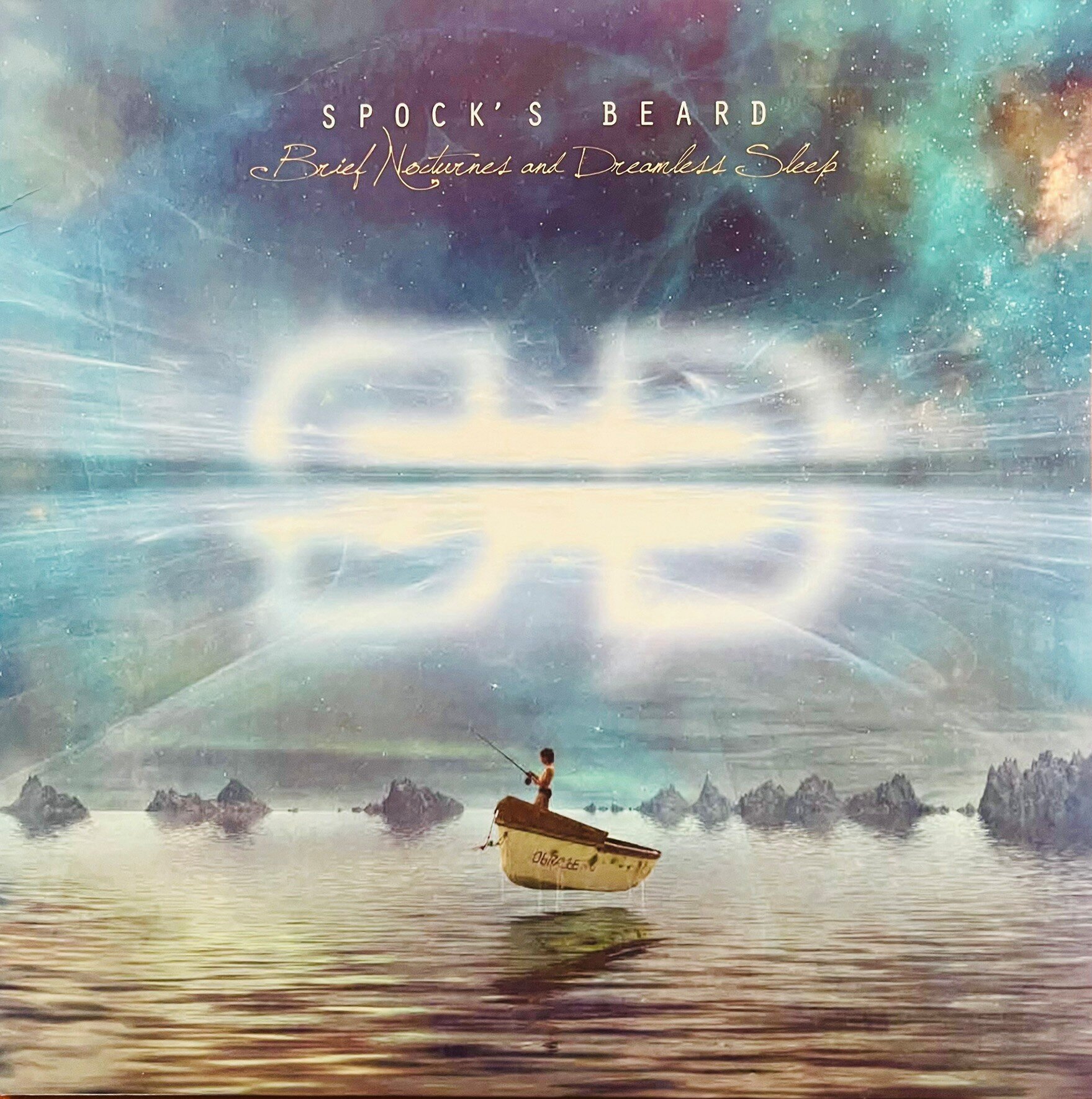
In 2011, D'Virgilio left the band to pursue other projects, and Enchant's Ted Leonard took over as lead singer, while Jimmy Keegan joined the band permanently. With this lineup, they released Brief Nocturnes and Dreamless Sleep (2013) and The Oblivion Particle (2015).
In 2018, the band released its thirteenth studio album, "Noise Floor," which saw the return of Nick D'Virgilio as session drummer.
Their style is progressive rock with pop influences, featuring complex compositions and ample scope for technique and virtuosity, with beautiful multi-part vocal harmonies. They continue the legacy of 1970s progressive bands with modern solutions, with atmospheres that verge on hard rock or even metal, alternating with delicate, acoustic, and melodic sections.
Funk and pop influences are a key part of the sound, making the songs accessible and catchy despite the great display of technique, virtuosity, and complexity.
When listening to the songs, it's inevitable to find more or less explicit references and nods to bands like Yes, Genesis, Gentle Giant , King Crimson and Pink Floyd, as well as the use of vintage sounds, especially on the keyboards (organs and Mellotron).
The songs are characterized by complex rhythms and long, epic songs, but also by splendid harmonies and multi-part vocal counterpoints.
This album sees a further change in the lineup with the addition of the extraordinary Nick Potters on drums, following the transitional album that saw the return of Nick D'Virgilio as a guest (on Noise Floor), who in turn had replaced Jimmy Keegan.
I haven't found much information about the album title "The Archaeoptimist," which refers to the main character of the title track. I've limited myself to a breakdown of the original "Archaeoptimist" into "Archaeo-Optimist," which I found reflected in the story told by the title track.
"Archaeo," a prefix derived from the Greek word meaning "ancient" or "original" (as in archaeology or archaic). This reflects the post-apocalyptic world in which the story is set, a return to a more basic or primordial existence.
"Optimist" refers to the protagonist, a girl who maintains a positive and hopeful outlook (an "optimist") despite being the last of her kind in a ruined world.
The story narrates her journey as she is raised by her father and ultimately grows from a source of inspiration to a leader, a metaphor for the search for hope and an optimistic perspective despite the complexities and challenges we face, connecting our gaze to the past ("archaeo") for a positive ("optimistic") future.
The album contains six tracks for over 60 minutes of music and a lengthy suite that on the vinyl is divided into two parts (Side C and Side D) with a total running time of over 20 minutes.
- Invisible opens the album with a beautifully crafted pop-rock track with a beautiful, driving middle section, 1970s keyboards, and great drumming. It then begins to showcase beautiful backing vocals, a compelling 1990s rock sound.
- Electric Monk is an epic track with great vocals and eclectic, melodic moments. It's a beautiful track with impressive keyboards, and it's inevitable that you'll find a sound reminiscent of Gentle Giant and King Crimson at times.
- With Afourthoughts we get to the heart of the complexity. It begins with a series of complex breaks, then a tense piece unfolds, with a fast-paced rhythm featuring dissonant keyboards and synths and distorted guitars. A moment of eclectic prog leads into an epic melodic section, followed by a short interlude of acoustic guitar and vocals that seamlessly transitions, followed by complex breaks on the same melodic theme. A complex piece, rich in virtuosity on the keyboards and drums. It offers a beautiful a cappella section with splendid counter-melodies and vocal harmonies that take on an almost rhythmic role. On the same theme, breaks and choruses reminiscent of YES begin, and then a jam begins with the bass taking center stage, monstrous, with an almost jazzy sound, and a large, sensational electric piano part, in synergy with the great drum beats and vocal harmonies, in a sunny mood completed by a beautiful guitar and keyboard solo, with imperious drums. The chorus is beautiful with its airy breadth. The song ends with just the vocals and choruses. A great song.
- St. Jerome in the Wilderness begins with complex breaks punctuated by pauses of silence, then the piece begins with the addition of the vocals, and the same breaks become syncopated with the drums and bass taking center stage with a powerful rhythm and remarkable virtuosity. It contains a beautiful section with a spectacular dialogue between keyboards and drums on the same melodic theme. Here too, the influences of King Crimson and Gentle Giant are evident. A song that is constantly imbued with a grandiose mood until the piano and drums enter a soft, jazzy mood, becoming light and romantic with a captivating melody and passionate vocals. This section is followed by a slow, long progression where the emphasis increases but doesn't fully explode. The eclectic breaks begin again, followed by an instrumental section with a long, grandiose guitar solo, featuring a deep, incisive bass, and a haunting tone bordering on that typically found in progressive metal.
The keyboard and drum breaks return, with fantastically sculpted bass textures, and a keyboard solo of pure creativity and virtuosity accelerates, creating a sustained, pressing section. A triumph of virtuosity and technique until the opening theme returns, with the vocals and splendid backing vocals, the broad, airy rock chorus, a beautiful vocal performance, and a captivating piano solo finale. TOP Track.
- The Archaeoptimist is a suite divided into two parts on vinyl, but it's also a piece containing many tracks.
Part 1 begins with an epic, extended instrumental performance of great choral intensity and magnificent guitars. The vocals then enter in a soft section with light drums and a romantic, highly melodic piano and bass melody. This romantic and engaging moment is set against a basic rhythmic foundation and features a beautiful piano arrangement, which slowly progresses, increasing emphasis on the same theme. There are many almost "scholastic" devices, breaks, and transitions, the kind that great composers know how to use to make their songs captivating. There's a brief piano solo that segues into a synth explosion of magnetic loops and powerful bass, with the drums providing the foundation for a ride where keyboards and guitar create, within the complex drum and bass sequence, an atmosphere of tension and mystery, or of a positive, airy melody. The keyboards are beautiful, and the overall synergy between the instruments is spectacular. A more up-tempo, pop-oriented section begins, beautifully styled and featuring beautiful vocals. Breaks and choruses reminiscent of Toto's hits, and a captivating progression unfolds, culminating in a fabulous, unexciting guitar solo, followed by an equally restrained yet effective keyboard solo. It's a beautiful, rhythmic song within the larger song; it's just one phase of it, but it's beautiful and very engaging. The drums, always magnificent, add complexity even where it shouldn't be, but they succeed, and this track-within-a-track ends with a powerful section of breaks and virtuosity, with melodies and atmospheres splendidly reminiscent of Genesis. But the song quickly shifts mood and becomes electric pop with dissonant guitar variations.
The song enters a new phase of alternating rise and fall, with a basso continuo in perfect '90s pop-rock style and off-beat breaks. A moment of solo vocals on a straight kick drum, almost Blues Brothers-style, follows, building, and then incredibly, progressive metal arrives with organ and heavy guitar in a continuous, haunting riff. Then the straight-kick pop-rock song resumes, but the breaks remain heavy and the tempo is that of a metal ride, which then continues into a haunting instrumental section with guitar and keyboards, almost eerie in its melody. A prolonged section with stratospheric drums, vocals, and a carpet of keyboards on a sustained but not heavy tempo fades into silence.
Part 2 is on side D and begins with the same Toto-esque melody, light, wide, and airy, with beautiful vocals and a sustained yet clean tempo that segues into a slower, more intense tempo with big guitars and complex breaks, following the same progression but in different tones, and with once again magnificent drums, a song that concludes with a clean finale. A marvelous song.
- Next Step is the last track, 10 splendid minutes, beginning with a beautiful, sustained and harmonious modern classical piano piece, interspersed with vintage keyboards and drums in a very epic mood. The tempo quickens and the guitars split. Then the vocals enter, the tone lowers without losing energy for a few bars, and then it starts again decisively, the mood is clean yet intense rock. This rock ballad mood alternates with a more '90s rock feel. Then the acoustic guitar and synthesized horns enter, creating a melody that straddles folk rock and Genesis's acoustic guitar compositions. A beautiful melody and a captivating, harmonious performance that has moments of superior intensity, but never overdoes it. Until a much more complex moment arrives, with purely Genesis-style keyboards and a pressing, purely Genesis-esque drum beat, complemented by equally Genesis-sounding keyboard inserts. The guitar enters, and the overall intensity increases, with imperious breaks from the drums and keyboards that then return to the bass, taking center stage, over a carpet of wonderful vintage sounds. The song concludes with the opening theme; the harmonies, melodies, and technical solutions are very reminiscent of Genesis's classic songs like "The Cinema Show," both in their emphasis and grandeur, right up to the epic conclusion of this wonderful piece.
When I listen to new albums, I often ask my wife what she thinks. She's not a fan of prog, in fact, she almost suffers from it (and I put the "almost" in there so I don't feel too guilty), but often when I listen to symphonic rock albums, she appreciates them and gives me positive feedback, which eases my guilt.
When I asked her what she thought of this album, she said, "But it's an old album!" meaning it's a '70s album, like most of the ones I listen to.
Well, my wife (as always, of course, with everything) was right. It's an album that contains a synthesis of the rock, pop, and progressive sound from the '70s to the '90s (at least), with a particular emphasis and influence on some tracks from the sound of Gentle Giant and Genesis, with more or less explicit references.
A virtue? A flaw? This will certainly divide critics. My personal opinion is that it's a virtue. I've often expressed my opinion: that inheriting the legacy of bands of the past is not only admirable, but also desirable, and how normal it is for such influences to exist. Certainly, this album features a fundamental characteristic, necessary for this to happen: the musicians' immense technical ability. We're talking about a stratospheric band, highly oriented towards virtuosity, even to the point of ostentatious display. Last but not least, a unique characteristic: the fusion and layering of different musical styles on a single album, and often on a single song. By layering, I mean the use of pop sounds in prog metrics or vice versa, typical metal tempos and patterns on typically pop melodic themes, surprising shifts in sound from one genre to another, with sections where different atmospheres overlap as if a club DJ with great passion and knowledge of prog were at the mixing desk in a dusty rock arena, mixing songs from different genres while maintaining end-to-end coherence—a very difficult mission, yet perfectly accomplished. This is definitely an album worth having in your collection. Excellent!
Note: All links to the musicians' works are in the TAGS under the article title or on the "Artists" page.
Tracklist
1. Invisible (6:33)
2. Electric Monk (6:16)
3. Afourthoughts (7:31)
4. St. Jerome in the Wilderness (8:46)
5. The Archaeoptimist (20:57)
6. Next Step (10:58)
Duration 61:01
LineUp
- Ted Leonard - lead vocals, guitars, keyboards
- Alan Morse - guitars, vocals
- Ryo Okumoto - keyboards, vocals
- Dave Meros - bass, keyboards, vocals
- Nick Potters - drums, vocals
.jpeg "whatsapp-image-2025-12-01-at-20.16.37-(1).jpeg")
.jpeg "whatsapp-image-2025-12-01-at-20.16.37-(7).jpeg")
.jpeg "whatsapp-image-2025-12-01-at-20.16.37-(6).jpeg")
.jpeg "whatsapp-image-2025-12-01-at-20.16.37-(5).jpeg")
.jpeg "whatsapp-image-2025-12-01-at-20.16.37-(3).jpeg")