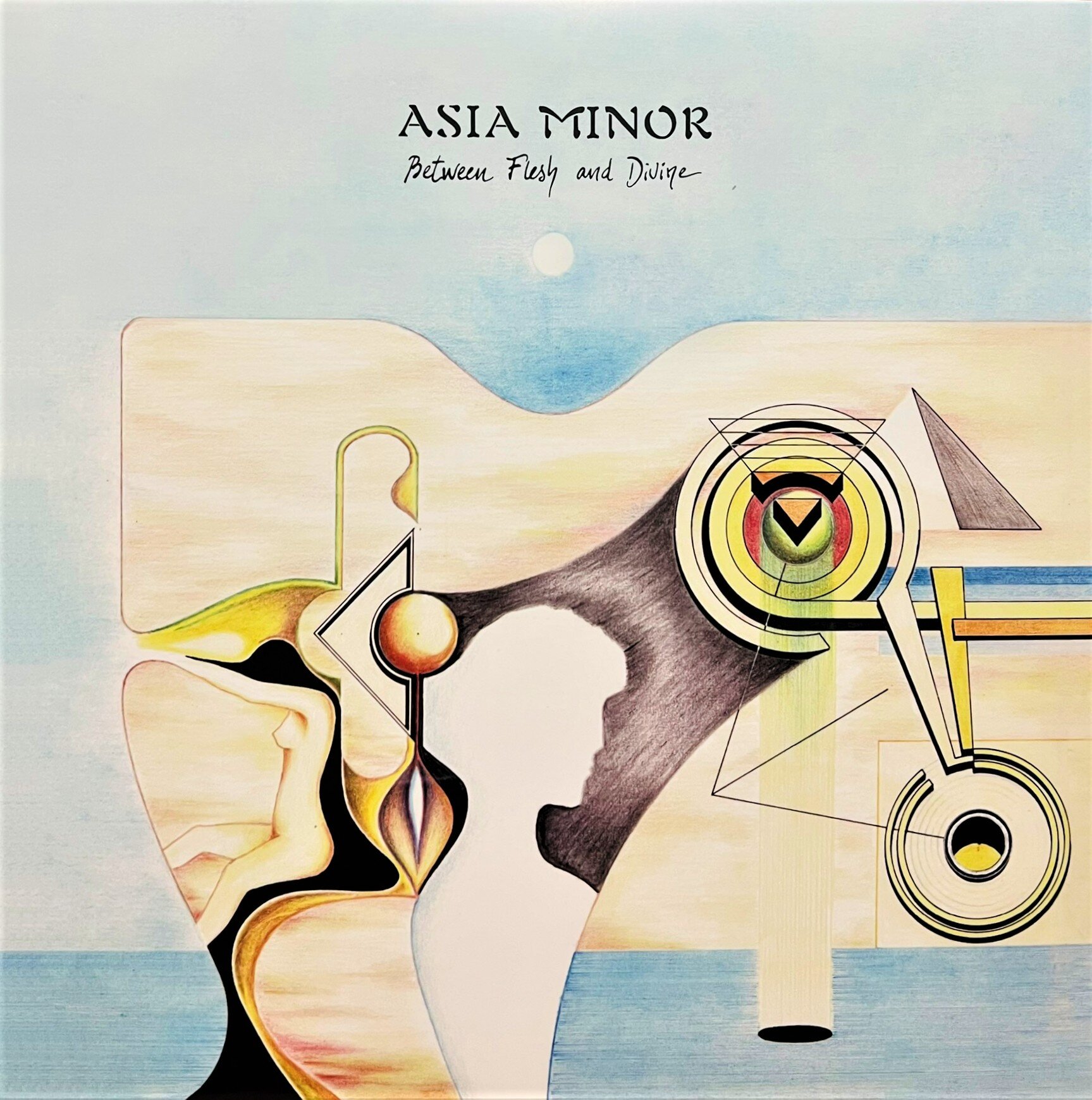

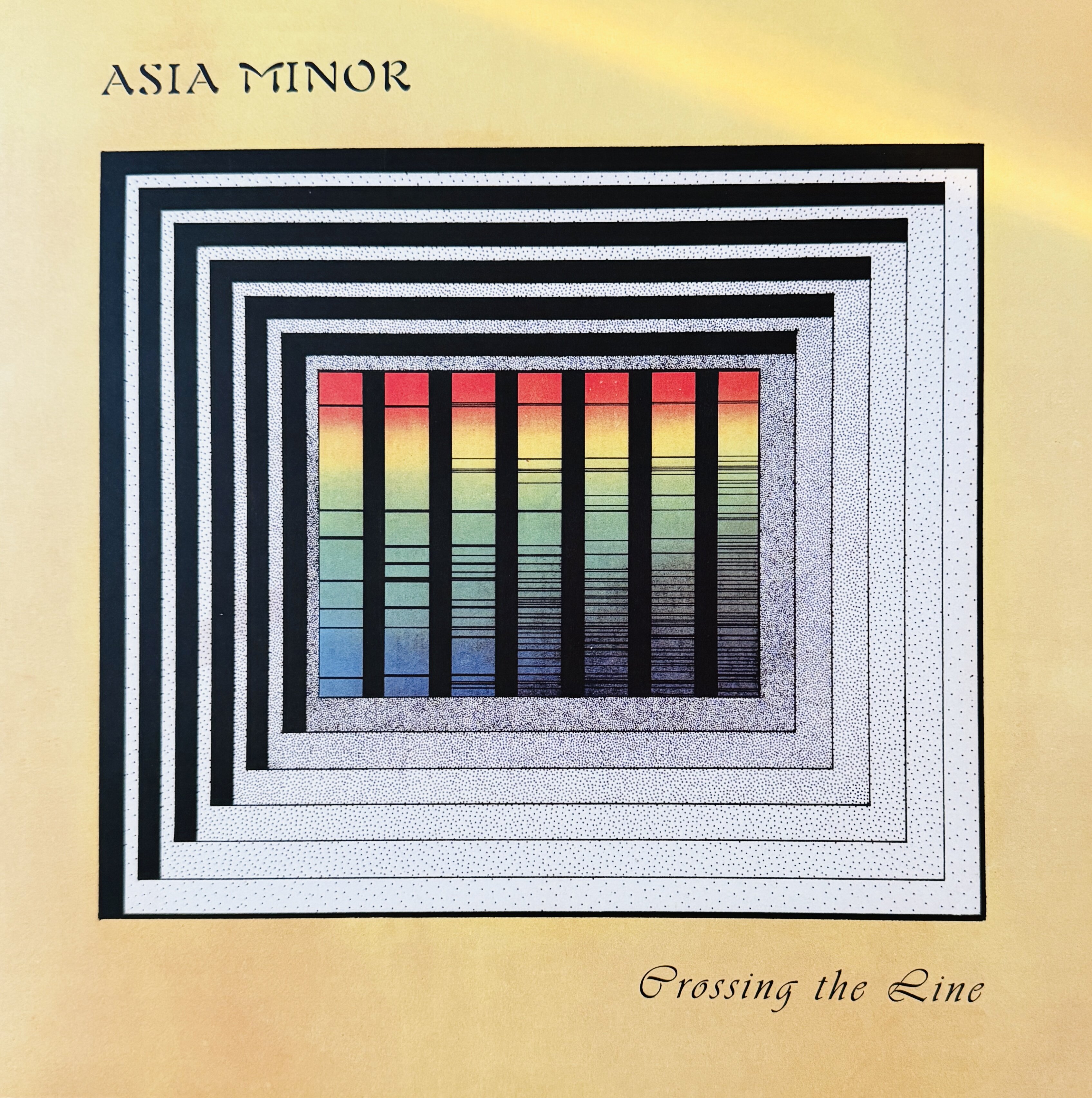
Crossing the Line by Asia Minor, 1979 album
I have already talked about this band in the review of their album "Between Flesh and Divine", a true jewel of symphonic rock from 1980. It almost feels like it's ten years older, one of the best albums of that decade, without a doubt. The band is made up of Turkish and French musicians, and their style is intimate, deep and a little dark, with a psychedelic touch in the air. Their compositions are splendid and the instrumental parts are really valuable. Setrak Bakirel's voice is young and deep, but also clear and enveloping.
Flute and guitar are the fundamental elements of their sound, accompanied by a robust bass and quality drums. Setrak's voice is deep, but he can also be soft and quiet when needed. Their compositions are exceptional, with alternating delicate moments and powerful instrumental sections both instrumentally and vocally.
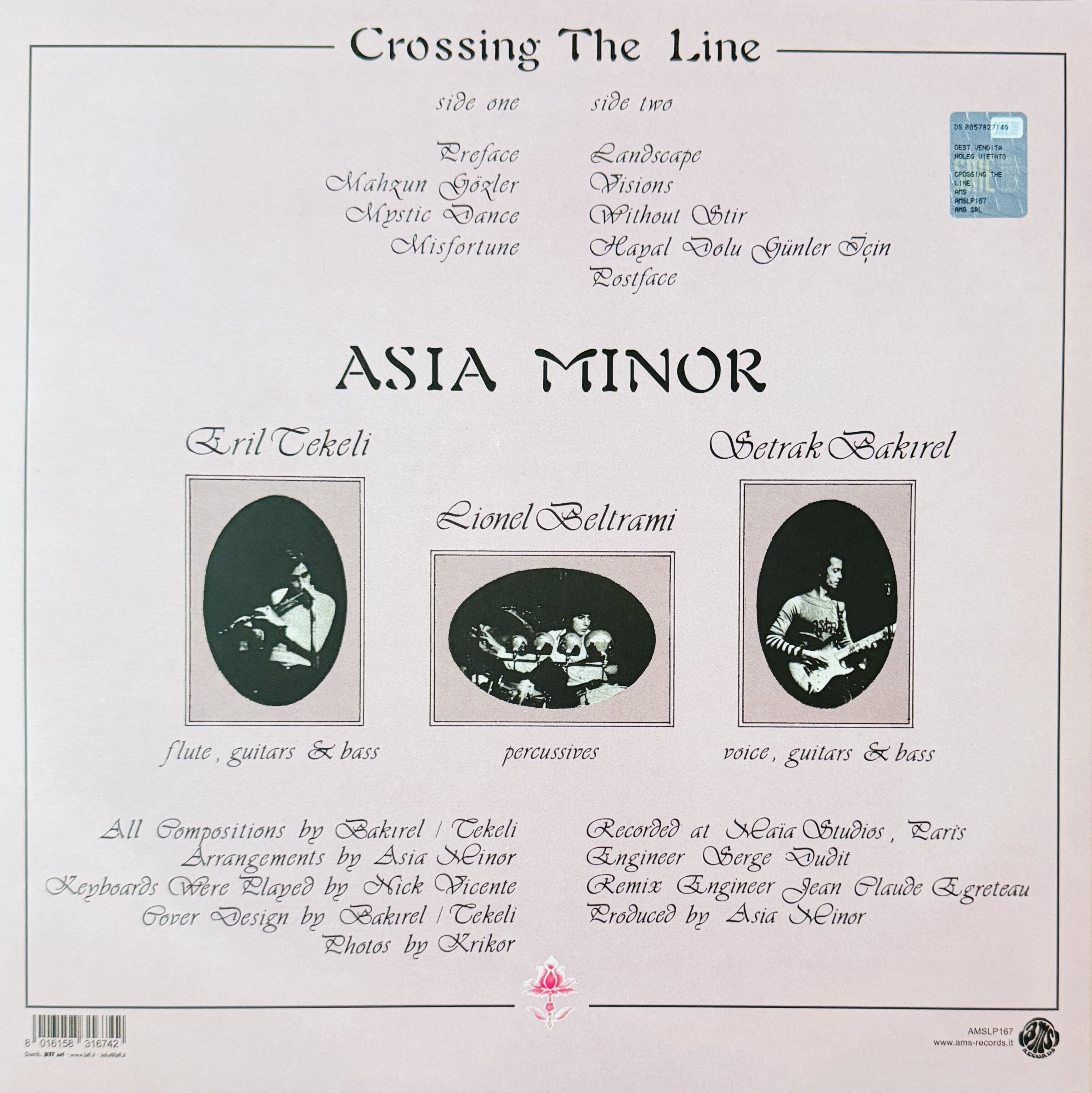
Released in April 1979, "Crossing the Line" is the debut album of a band that has become a true reference point of symphonic progressive rock. This album is unique because it manages to blend the classic sound of European prog with the atmospheres and rhythms of traditional Turkish music. At the time of recording, the group was officially a trio, but collaborated with guest keyboardist Nick Vicente. Despite being released in 1979, a time when punk and new wave dominated the music scene and prog was already considered outdated, the album has remained true to its origins, those of the prog of the early 70s. It is not a "concept album" in the strictest sense, but it is a work driven by a very marked theme and sound: expat life and cultural duality. The title itself, "Crossing the line", suggests the idea of a boundary that is not only geographical but also cultural and spiritual that is being crossed.
The border between East and West is an intriguing meeting place, and this is also reflected in the music of Setrak Bakirel and Eril Tekeli, the two Turkish musicians who reside in Paris. Their music is a unique blend of Western Prog Rock, with influences from bands such as Camel and King Crimson, and the modal scales and odd rhythms typical of Anatolian music. Even the lyrics play with this double identity, alternating English and Turkish, unlike their next album, "Between Flesh and Divine", entirely in English.
Crossing the Line is a symphonic Progressive Rock album that is characterized by its distinctive imprint, shaped by the Middle Eastern origins of its creators. The album pays homage to the greats of Prog, with Bakirel's guitars recalling that fluid, melodic and "crying" sound typical of Andrew Latimer. The use of the Mellotron, although simulated or used in moderation, and the dramatic structures evoke In the Court of the Crimson King. Eril Tekeli's flute is the main instrument, with a nervous, ethereal and deeply melancholic timbre, unlike Genesis' "pastoral" flute or Ian Anderson's "aggressive/folk" flute. The flute often overlaps guitar lines or drives tempo changes, creating a dreamlike atmosphere. The melodies do not adhere to Western canons, but are inspired by the makam (musical modes) of the Anatolian tradition, giving them an exotic and mysterious flavor. The rhythm section is articulated but never disordered, capable of alternating conventional rock tempos with rhythmic structures typical of Turkish folk music.
The atmosphere of the album is predominantly melancholic, nocturnal and reflective, with a high complexity always at the service of the melody. There is never virtuosity for its own sake. The production delivers a clear sound that highlights the contrast between the most tense acoustic and electric moments. A refined and cultured prog rock, which prefers to excite with subtlety rather than impress with speed.
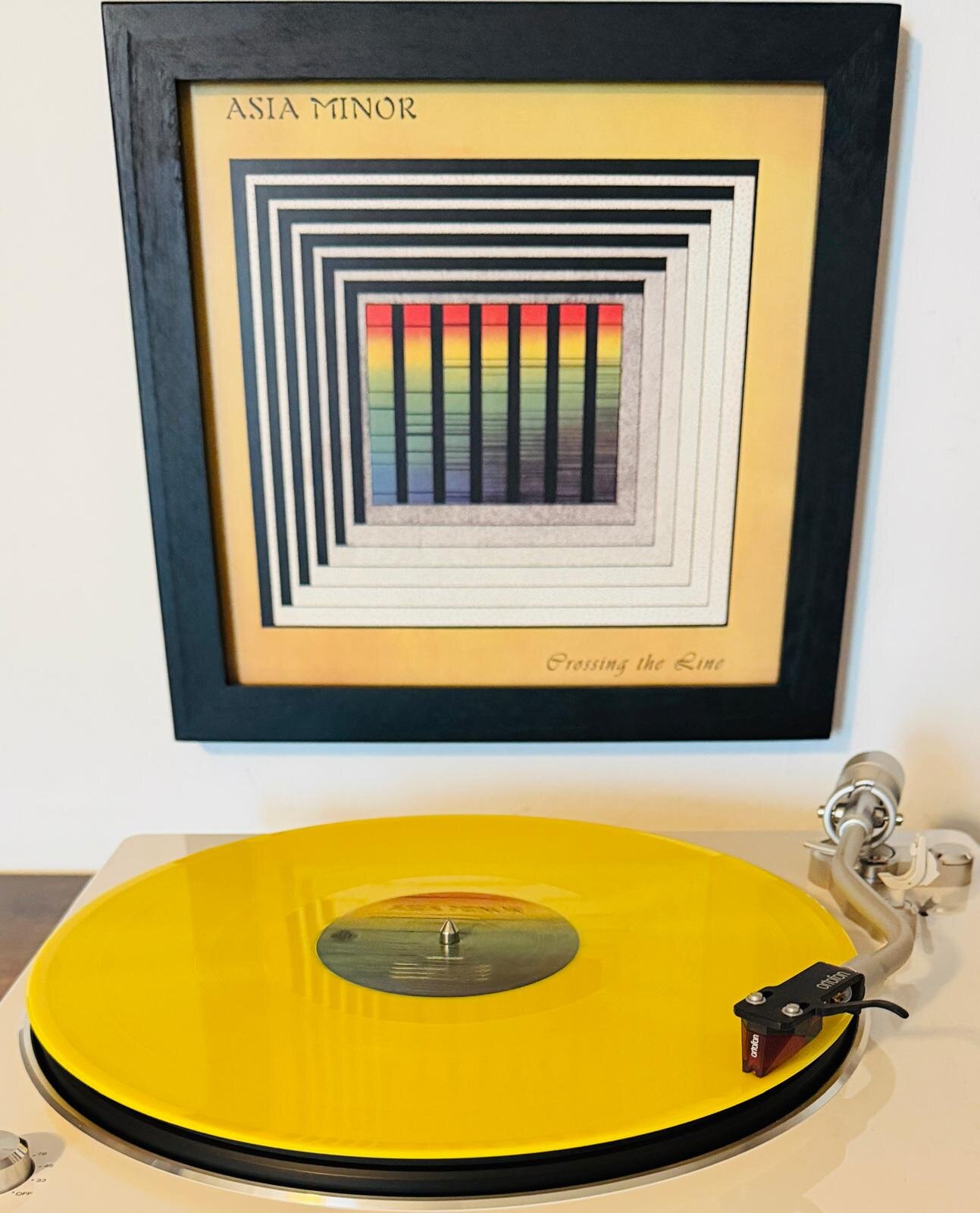
I have the 2022 AMS Records reissue which stands out for having brought the midrange frequencies back to a higher level of brilliance, offering a much improved definition of flute and 12-string guitars compared to previous editions.
"Preface" is an instrumental introduction that creates an evocative atmosphere. It opens like a curtain, immediately establishing the melancholic and suspended tone of the album with carpets of keyboards and delicate flute interventions. The intro is symphonic and dreamlike. Nick Vicente creates an ethereal keyboard carpet on which Tekeli's flute introduces the main theme.
"Mahzun Gözler", which translates to "Sad Eyes", is one of the highest tracks on the album. Here the mixture of prog and Turkish music reaches a perfect balance: the flute draws sinuous melodies on intricate rhythms. Bakirel's voice is soft, evoking a deep melancholy. It is epic prog with marked Middle Eastern influences (Makam). It is the group's business card. Setrak Bakirel offers a painful and delicate vocal interpretation in Turkish. The bass (played in turn by Bakirel or Tekeli) runs along jazzy lines, while Lionel Beltrami on drums faces the odd tempo changes with surprising fluidity, without ever weighing down the song.
"Mystic Dance" is a short and rhythmic piece. As the title indicates, it has an almost tribal but elegant pace, which enhances the precision of Beltrami's drums and the fluidity of the flute. A folk-prog interlude with a pressing rhythm. Eril Tekeli is the real protagonist with an almost "rhythmic" flute. The song highlights the group's ability to generate tension quickly, thanks to a very lively cymbal and snare drum work by Beltrami.
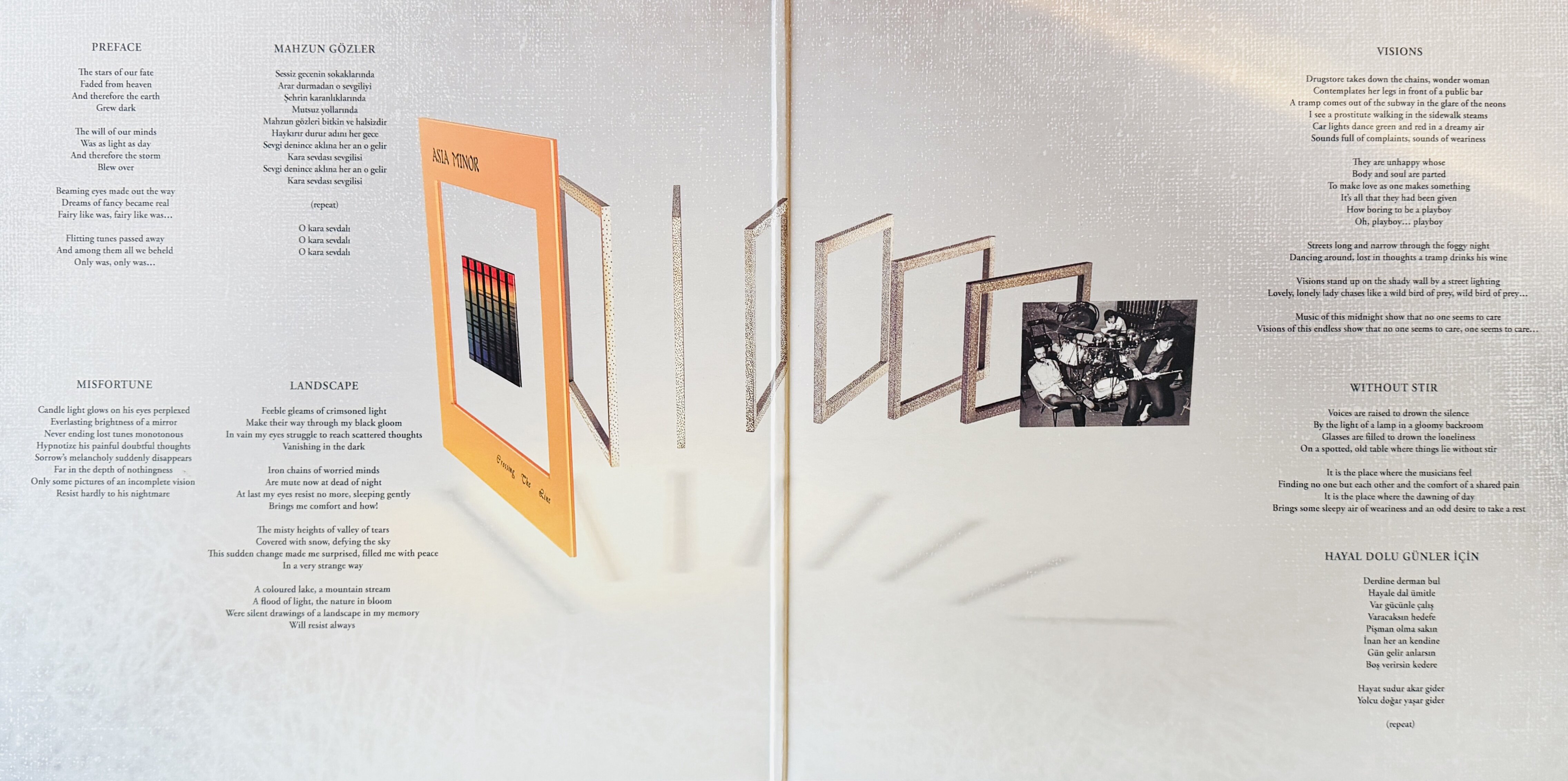
In "Misfortune" you can perceive the influence of the most poetic King Crimson. The piece is more articulated, with compelling dynamic variations that alternate moments of electric tension with softer melodic passages. Theatrical progressive rock. Bakirel's electric guitar is the protagonist, moving from clear arpeggios to more distorted and disturbing riffs. Vicente's keyboards contribute with an orchestral layering that gives the song a darker atmosphere than the previous ones.
"Landscape" is an instrumental piece that evokes the image of a landscape. The lead guitar is very reminiscent of the style of Andrew Latimer (Camel), with long notes that blend with the flute. A pastoral and lyrical piece, characterized by a continuous dialogue between the lead guitar and the flute. Tekeli's work on this track is more delicate and relaxed, demonstrating excellent breath and vibrato control.
"Visions" is the most dynamic track on the album. It features punchier guitar riffs and a tight rhythmic structure. It was the moment in which the band showed off its ability to accelerate in symphonic prog. Technical and tight prog rock. It is the track in which Lionel Beltrami stands out the most; His drumming is powerful and precise, driving the frequent changes of pace. The guitars become more aggressive, revealing the more "rock" side of the band.
"Without Stir" is a short acoustic break, dominated by the 12-string guitar and a bucolic atmosphere. Bakirel and Tekeli focus on 12-string acoustic guitars. It is a song focused on sound texture, great cleanliness of the touch of the two Turkish musicians.
"Hayal Dolu Günler İçin" "For days full of dreams", is a very melodic and poetic piece, in which the singing in Turkish adds a particular warmth. It represents the emotional climax of the entire album, a melancholic but serene farewell in a nostalgic progressive ballad. The return of Bakirel's Turkish voice generates a tangible emotion. Tekeli's flute responds to vocal lines as if it were a second singer. The rhythm section remains discreet, leaving room for melodic interweaving.
"Postface" is the short epilogue that takes up the themes of the beginning, closing the circle of the work in a cyclical way. A brief sound call that dissolves into silence. Vicente's keyboards leave a feeling of incompleteness...
Hüzün, a sweet and deep melancholy typical of Turkish culture, is the common thread of this album. The lyrics and flute melodies do not try to amaze with technical virtuosity, as the prog of the 70s often did, but rather to evoke the sense of nostalgia for one's own land and memories of distant landscapes. The album is an inner journey, an intimate and reflective experience. As 1979 rock became increasingly frenetic and commercial, Asia Minor chose to "cross the line" to keep their cultural roots alive within a modern and accessible language.
An excellent and absolutely recommended album, penalized compared to the next one in my opinion for the language of the lyrics not always in English and the production not entirely crystal clear, but which musically in my opinion is extraordinary and in expressing the main concept very effective.
My Version
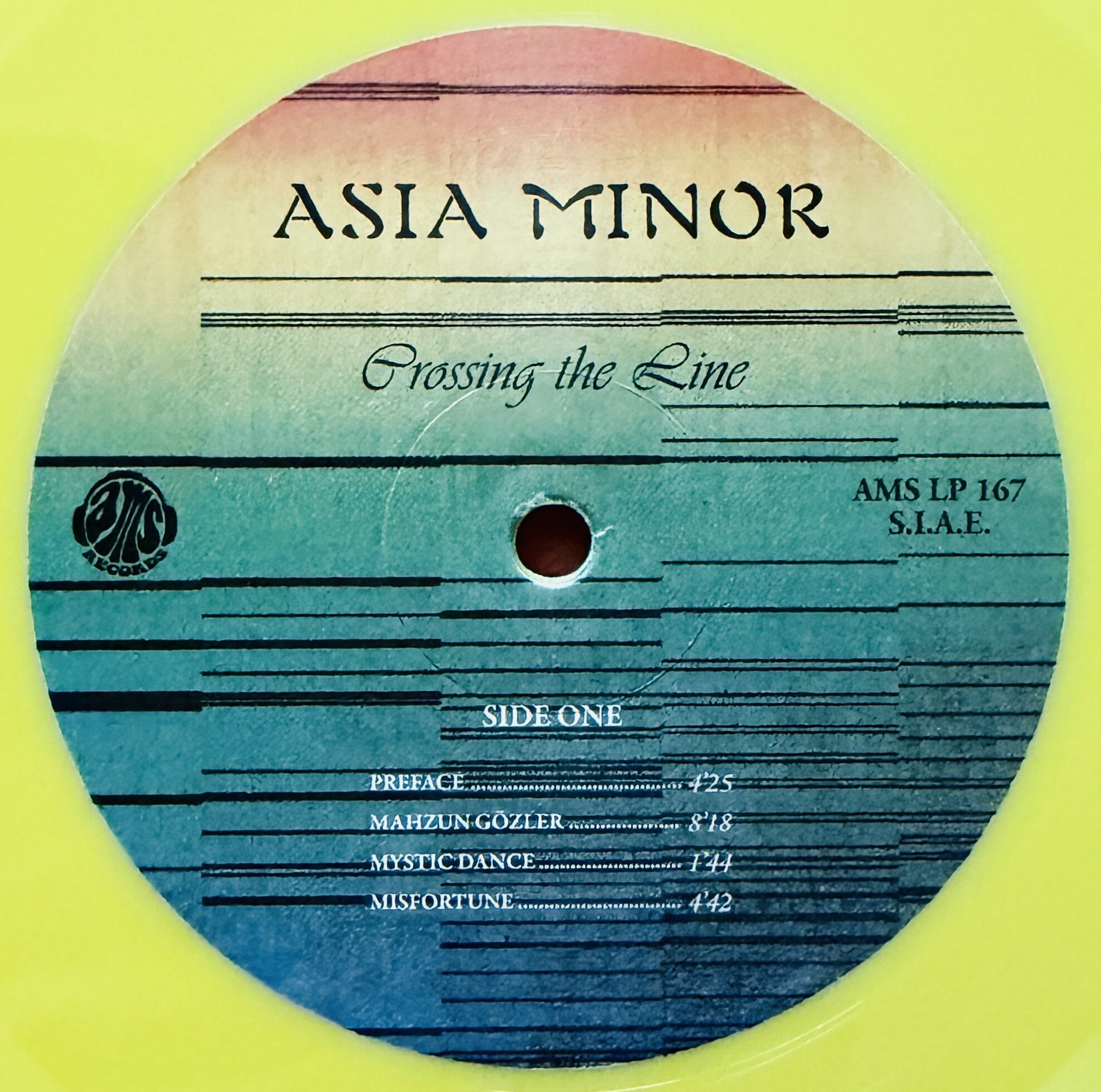
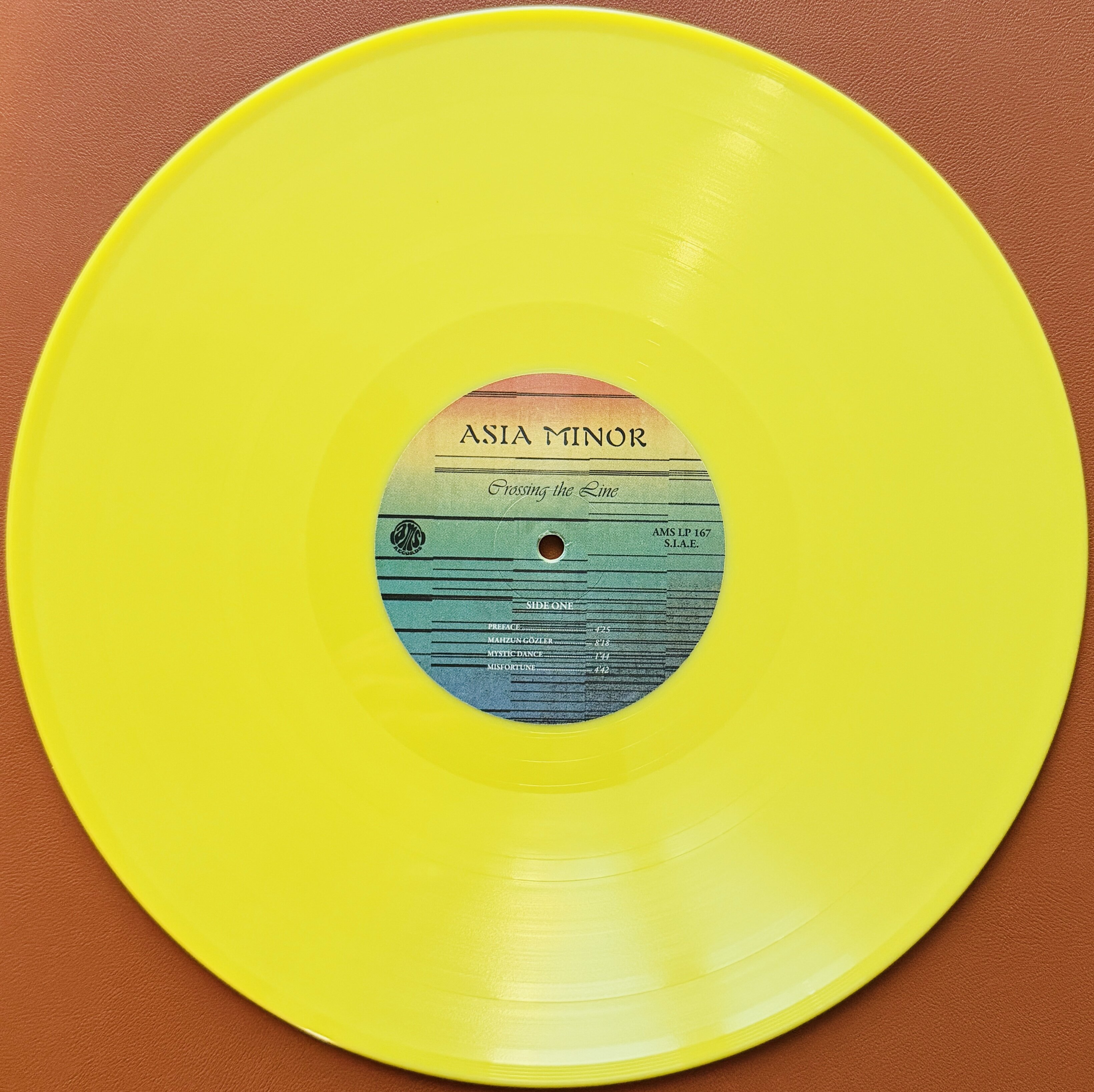
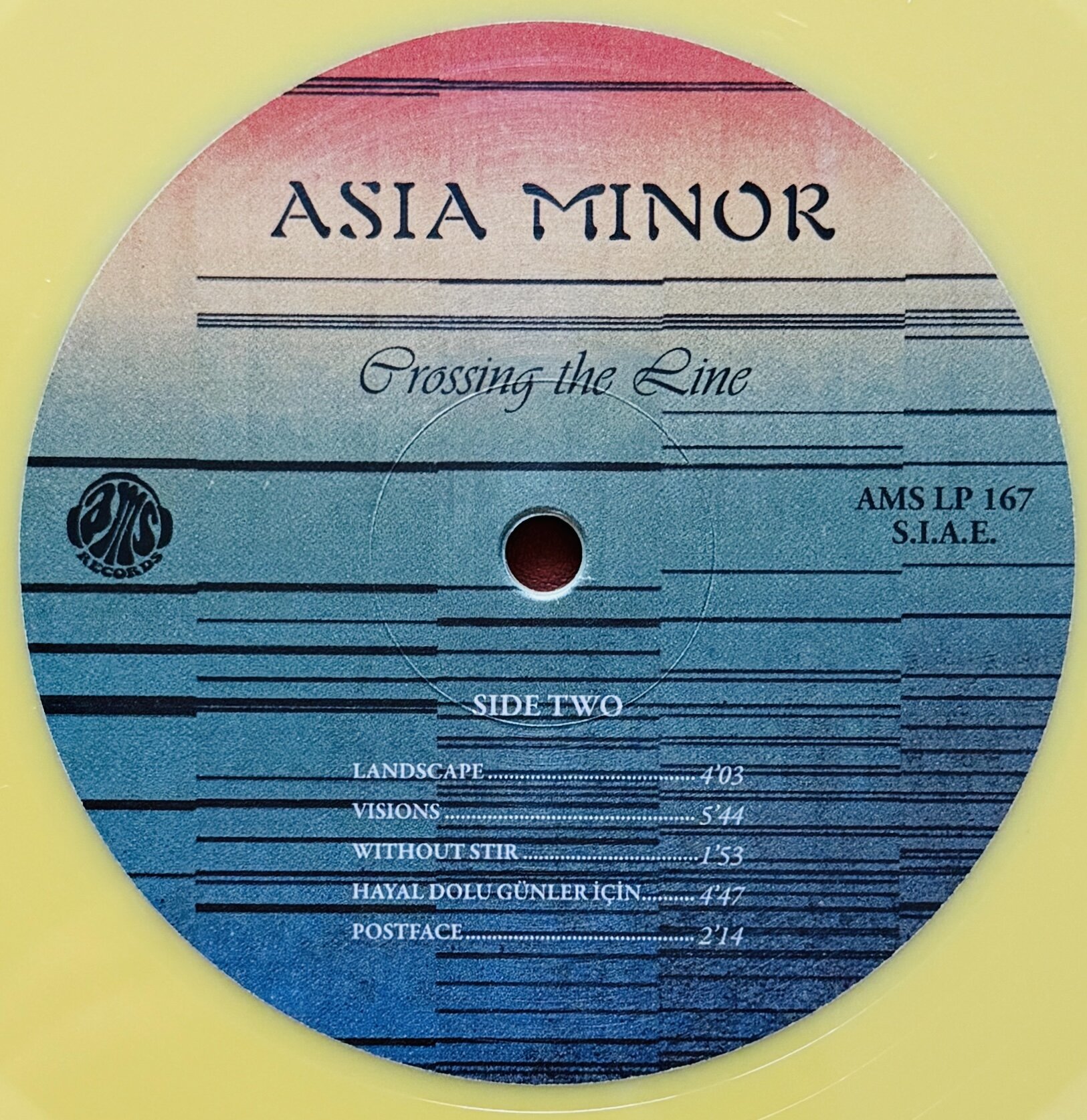
Label: AMS Records (6) – AMS LP 167, AMS Records (6) – AMSLP167
Format: Vinyl, LP, Album, Limited Edition, Reissue, Remastered, Stereo, 180 Gram, Yellow
Country: Italy
Release: 2022
Tracklist
A1 Preface
A2 Mahzun Gözler
A3 Mystic Dance
A4 Misfortune
B1 Landscape
B2 Without Stir
B3 Hayal Dolu Günler Için
B4 Postface
LineUp
- Setrak Bakirel - lead vocals, guitars, bass
- Eril Tekeli - flute, guitars, bass
- Lionel Beltrami - drums,
percussion With:
- Nick Vicente - keyboards
Listening link on the main streaming platforms at the following links:
Streaming Platforms:
Artist support:
Streaming and downloading on Bandcamp (Asia Minor Official) – This is the recommended platform to support the band directly.

Note: All links to the musicians’ works are in the TAGS under the article title or on the "Artists"